The Problem With Traditional Branding Agencies
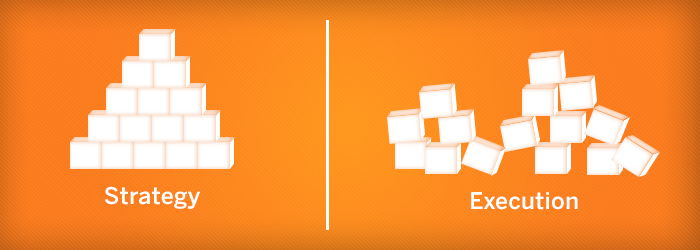
When branding and identity design are separated from the heavy lifting of designing consistent, cross-channel brand experiences, clients are left "Lost in Translation."
I recently completed brand strategy for a community development nonprofit here in New York—helping them fine-tune what they stand for, simplify their vision & values statements, focus on the core ideas that differentiate them, and uncover ways to better organize and present their programs and impact. After a few weeks, we had a solid brand messaging platform spelling out the Big 3 of Branding: Who They Are, What They Do, and Why They Matter.
We're also working with this client on a visual rebranding and website redesign. So, once the brand strategy work was complete, it was time to get to work on designing their website's user experience. Usually, I'd hand off this part of the project to a UX designer in the studio and give them background on the branding work I'd done.
But our IA's were pretty busy on other projects, and I already understood our client's history, their people, how they're structured, where they're trying to go, and the driving force behind it all. It just made a lot more sense for me to design the UX for their website. I hadn't gotten my hands dirty creating wireframes in a while, which made for good fun. Even better, the process has reinforced everything I believe about the benefits in collaborating with an integrated brand strategy and design firm.
Looks Great, Falls on the Road
A common complain you hear from clients who've worked with a branding firm is that the process is filled with lots of feel-good moments and valuable insights, but that it can be fleeting. They're left with a lot of good raw material, ideas and energy, but have a hard time effectively channeling it into something tangible that works in the real world. If you're going through a rebranding, starting with research and brainstorming to uncover insights, clarify ideas, and create differentiation strategies should always be the first steps. But then it's time to turn this thinking into a brand experience. And as Marty Neumeier says, that means you gotta design.
Some brand consultancies don't offer any design expertise. A lot of the big ones like Landor and Futurebrand usually develop outstanding visual identity design work if you can foot the bill, and they typically blow out a high-level concepts, or "brand extensions" that demonstrate what your annual report cover or your new home page might look like. Great. Problem is, these "brand extensions" usually don't use real content, never mind being built on content strategy, and when it comes to providing a scalable design system that actually works for your organization in the real world, forget it.
Online Loser Experience
When it comes to user experience design, the problem only gets worse. For years, lots of traditional branding agencies have steered clear embracing interactive. And as a result, it's left them in the dust. It's appalling how little some well-known firms know about website design and web technologies. User experience design is something they may have some experience with. Get into things like taxonomies, content types and the technical decision-making that are essential to creating great user experiences and their eyes just gloss over.
So assuming using the internet is important to your business strategy, where does this leave you?
You're probably going to have to engage another firm to execute your brand strategy online; another RFP, vetting process, and new partner to get up to speed and manage. At worst, it's a painful process where the central ideas and strategies that make up your brand are lost in translation. Or you could continue to pay your branding firm to quarterback the whole project and bloat your cost basis (and probably frustrate your interactive design team).
From my perspective, wholly unacceptable on every count.
Truly Integrated Branding & Design
Think about it. Content strategy is essential to effectively communicating your brand. Design is the essential discipline in branding. Technology is essential to communicating brand experiences online. So why on earth would you want to develop your branding separate from the design execution that make them real if you didn't have to? This brings me back to my experience working on the brand strategy and UX for our client, and to the idea that drove me to start MSDS in the first place.
I believe we're a better partner for our clients because we work with them collaboratively to develop brand strategies and messaging that help create organizational insight and focus, and we stay with them to develop the integrated design that brings them to life. And beyond designing highly effective, consistent branding, we also execute more quickly because we're so close to the strategies guiding us. Every insight gained from learning about what makes an organization tick—its history, the people, personalities and passions, their vision for the future, and most important, why they matter—all these things are inseparable the problem solving that every single design decision is a part of.
More efficient, more effective, and a better client experience? If you ask me, it doesn't make sense to do it any other way.
 Designing With the Real Deal
Insights
 The Best CMS for Content-Heavy Websites
Insights
 Beyond Like and Follow: Engaging Nonprofit Supporters Through Social Media
Insights
 6 Ways to Use Behavioral Science to Strengthen Your Brand
Insights
 Optimizing Audience Engagement with Behavioral Science
Insights
 Content-Heavy Websites: A Better Design Process
Insights
 Agile Branding for Startups & Growth Stage Companies
Insights
 Information Voters Can Actually Use
Insights
 Effective Nonprofit Website Design: 10 Case Studies