- Our Work
- Industries We Serve
- Services We Deliver
- Why Work with Us
- Our Thinking
- News
- Insights
- 5 Ways Design Systems Create Business Value
- 5 Ways to Make Your Nonprofit Engage Using Facebook Timeline
- 6 Great Interactive Data Visualization Tools (Part 1)
- 6 Great Interactive Data Visualization Tools (Part 2)
- Announcing the First Brands Behaving Badly Awards
- April 16, 2012
- April 2, 2012
- April 23, 2012
- April 30, 2012
- April 9, 2012
- Best of 2011 Roundup
- Brands Behaving Badly, Summer 2010 Bronze Medalist, Lebron James
- Brands Behaving Badly, Summer 2010 Gold Medalist, BP
- Brands Behaving Badly, Summer 2010 Silver Medalist, Toyota
- DIY Communications: Multitasking Your Way to a Mediocre Brand
- February 13, 2012
- February 21, 2012
- February 27, 2012
- February 6, 2012
- Five Things to Consider as You Dive Into Responsive Web Design
- Getting High on Your Own Supply
- Intervention: Identity Crisis Edition
- Invest in Partners, Not Products
- Is Your User Experience Degrading Your Brand?
- January 16, 2012
- January 30, 2012
- July 16, 2012
- July 2, 2012
- July 23, 2012
- June 11, 2012
- June 18, 2012
- June 4, 2012
- Labeling for Good: White Paper
- March 12, 2012
- March 19, 2012
- March 26, 2012
- March 5, 2012
- Maximizing Design Firm Relationships During the Budgeting Process
- Maximizing Design Firm Relationships by Managing Stakeholder Input
- Maximizing Design Firm Relationships by Setting Appropriate Success Metrics
- May 14, 2012
- May 21, 2012
- May 29th, 2012
- May 7, 2012
- Putting Pinterest to Work for Your Business or Nonprofit Brand
- Putting Pinterest to Work for Your Business or Nonprofit Brand Part 2
- Responsive Design Planning: More Than a Line Item
- Rethinking the Traditional Policy Report
- Show Your Nonprofit's Brand a Little Love!
- Speaking a Client's Language
- State of the State of the Union: Power(Point) to the People?
- Stepping Back From Komen's Brand Disaster
- Storytelling for Business: The Infographic!
- The 5 Benefits of Designing a Consistent Brand
- The Fundamentals of Developing a Strong Brand
- The Website RFP - Basic Best Practices for Small Businesses and Non-Profit Organizations
- Three Ways for Nonprofits to Maximize Design Firm Relationships
- Three Ways to Future-Proof Your Content Management System
- Web Typography Part 1
- Web Typography: An Important Way to Strengthen Your Brand Online (Part 2)
- All
Putting Pinterest to Work for Your Brand (Part 1)
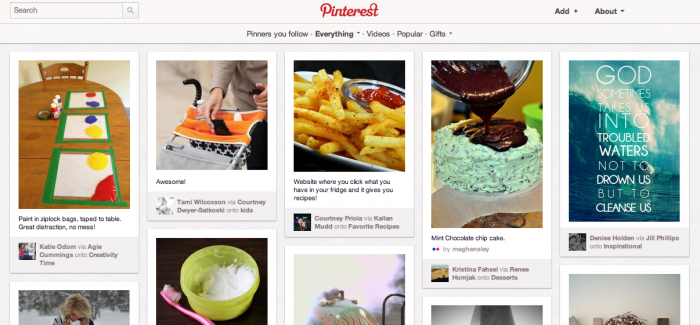
Social media’s newest network has proven to be a branding goldmine. Seemingly out of nowhere, Pinterest has become one of the top five referring sources on the Web for retailers, and holds an undeniably addictive appeal to online audiences. But much like the early days of social media, there’s a lot of fumbling around going on by brands trying to figure out how to put Pinterest to use in a meaningful way.
If you’re a business or nonprofit organization looking to expand social media efforts to strengthen your brand and broaden your reach, in this two-part article I’ll share ideas on how to use Pinterest to help strengthen your brand.
Target Your Audience
The first rule of creating a strong brand is to focus on the audience. Well, 87% of Pinterest’s 10+ million users are women between the ages of 25 and 54. It’s marketing 101, but so often forgotten, ask yourself within this demographic, what is your target audience? Focus your efforts on targeting this segment, and stay on-brand, and you’re going to get off to a much better start. And like any good social media strategy, don’t revert to robotic brand speak and batter your audience with brand bombing. Follow the accepted etiquette and speak to your audience in their language.
Create A Brand Presence
Pinterest’s greatest strength is as a storytelling medium, helping you create visual narratives for your brand. Back to focusing on the audience: take advantage of this powerful approach to social media by promoting themes that center around user interests. By creating “pinboards” to tapping into broader, meaningful themes to your audience, you’ll you’ll be able to use the strength of visuals to allow people to engage with your brand on a more emotional level.
Whole Foods is one of the top businesses leveraging their brand on Pinterest. They’ve got 30 pinboards, like “We’re Used to Reusing!” and “Great Garden Recipes” —great examples of how to create emotional visual stories that pull together a wide range of elements from the Whole Foods brand into an engaging, cohesive whole.
One great way to start creating on-brand pinboards on Pinterest? Leverage your brand standards by creating visually consistent themes built on the colors, typography and of course, imagery of your brand. The results will be consistent and better integrated with of your other marketing efforts. Above all, remember, you’re telling a story to your audience through the themes of your brand that they find meaningful in their lives. In this way you embody what’s interesting to them while reinforcing who you are, what you do, and why you matter.
Create To Convert
So, you’ve identified your audience and decided to start using Pinterest as a brand marketing tactic. Like lots of social media platforms, they’re great ways to get the word out and engage audiences—the trick is getting something more measurable out of it. For lots of businesses and nonprofit organizations, the real value in Pinterest is estimated by how well it converts.
Whether your business is all about products or you’re a nonprofit that needs to fundraise or is looking increase volunteer activity for a campaign, the single most important thing to keep in mind is to use what Pinterest does well to make the user experience easy. Take advantage of Pinterest’s visual nature to put products or the gifts donors get for their contributions front and center. And when you pin things like product shots, list the price (or contribution level for nonprofits) and of course make it easy for users to click on one link to purchase.
Similarly, Pinterest is an excellent venue for nonprofits to fundraise—not only can you bring the emotional energy from the campaign mission to life through images, you can create a campaign board where you pin photos or videos that communicate impact by showing your supporters how their donations are being put to work.
Hope you’ve enjoyed our 1st segment on how to put Pinterest to work for your business or nonprofit. Check back with us next week, when I’ll spend a bit more time getting into issues like integrating analytics to your Pinterest account, and legal issues you want to be aware of before you jump in with both feet.
InsightsDesign Thinking For Sustainable Social Change
NewsNonprofit Technology Network Publishes MSDS DataViz Feature
InsightsWriting Effective Impact Stories for Nonprofits